

Important Disclaimer: SS-31 (Elamipretide) is an experimental research peptide. It is not approved by the FDA for human consumption or for the treatment of any medical condition. This article is for informational purposes only and does not constitute medical advice. The use of research peptides carries significant risk. Always consult with a licensed healthcare professional before considering any new supplement or compound.
Introduction: The Promise and the Peril
Imagine targeting the very power plants of your cells to slash recovery time, combat training-induced fatigue, and unlock new levels of endurance. This is the compelling, science-backed promise of SS-31 peptide, a compound that has moved from cardiology research into the sights of athletes and biohackers.
For bodybuilders pushing through plateaus and endurance athletes seeking an edge, the allure is clear: what if you could enhance your body’s fundamental energy machinery? However, this potential comes with profound responsibility. SS-31 exists in a regulatory gray area—a research chemical with fascinating clinical data but zero long-term safety studies in healthy athletes.
This guide is not an endorsement. It is a safety-first, risk-mitigation manual for the informed individual. Our sole aim is to provide the most comprehensive, cautious, and scientifically-grounded information available if you are researching this compound. Let’s begin with understanding what it actually does.
Part 1: What is SS-31 Peptide? The Mitochondrial Mechanic
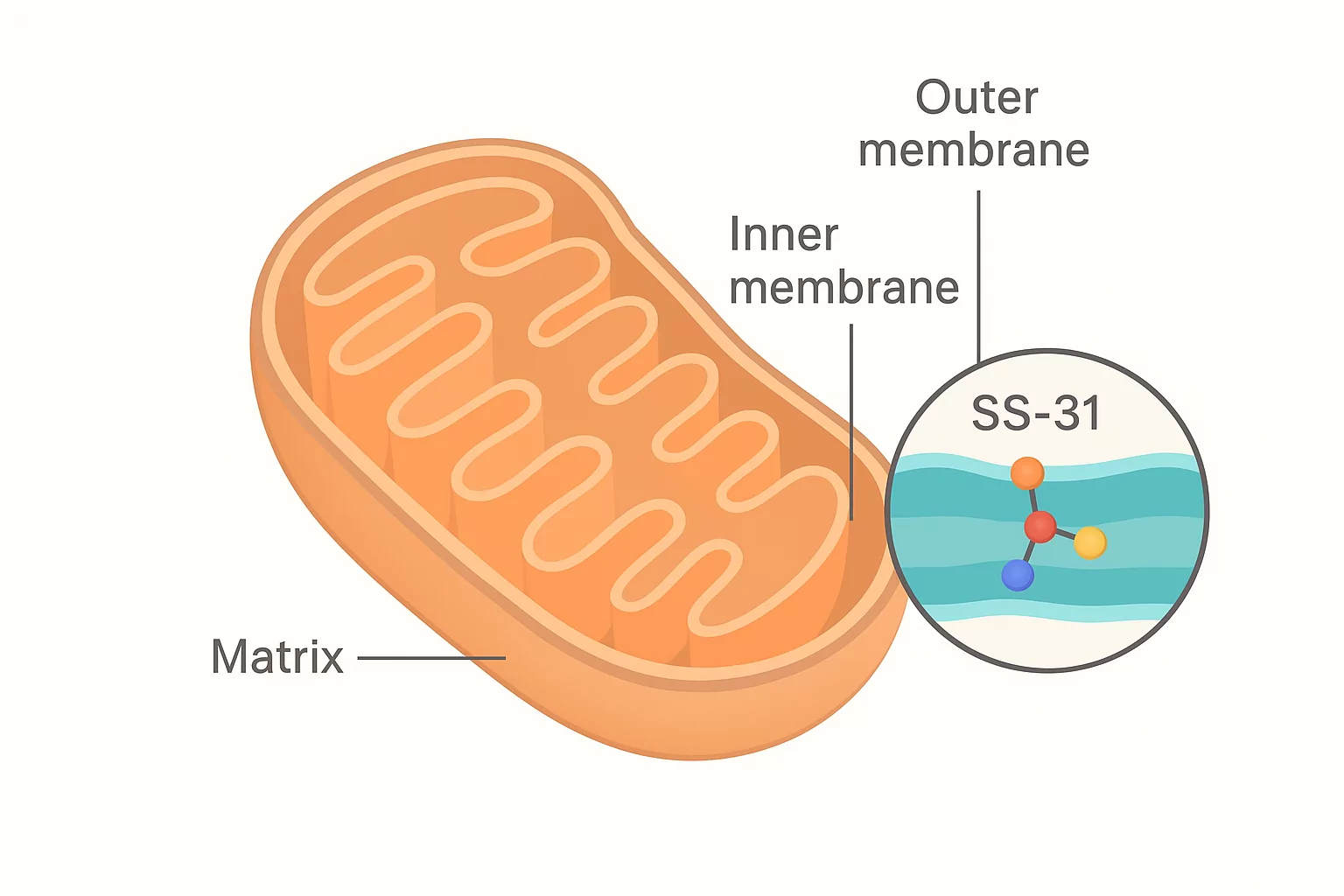
SS-31, also known as Elamipretide, isn’t a hormone or a typical anabolic agent. It’s a small, synthetic peptide that specifically targets the inner mitochondrial membrane.
The Mitochondria: Your Cellular Power Plant
Think of each cell’s mitochondria as a network of tiny batteries producing ATP (adenosine triphosphate), the currency of energy for everything from muscle contractions to brain function. The inner membrane is where this energy production happens. Over time, and especially under the oxidative stress of intense training, this membrane can become damaged and leaky, reducing efficiency and increasing harmful reactive oxygen species (ROS).
How SS-31 Works
SS-31 binds to a unique phospholipid called cardiolipin, essential for the structure and function of the inner mitochondrial membrane. It acts like a specialized stabilizer and maintenance crew:
- Stabilizes Structure: Helps maintain the membrane’s integrity.
- Reduces Oxidative Stress: Scavenges damaging free radicals at their source inside the mitochondria.
- Improves Efficiency: Supports optimal electron transport chain function, potentially leading to better ATP production.
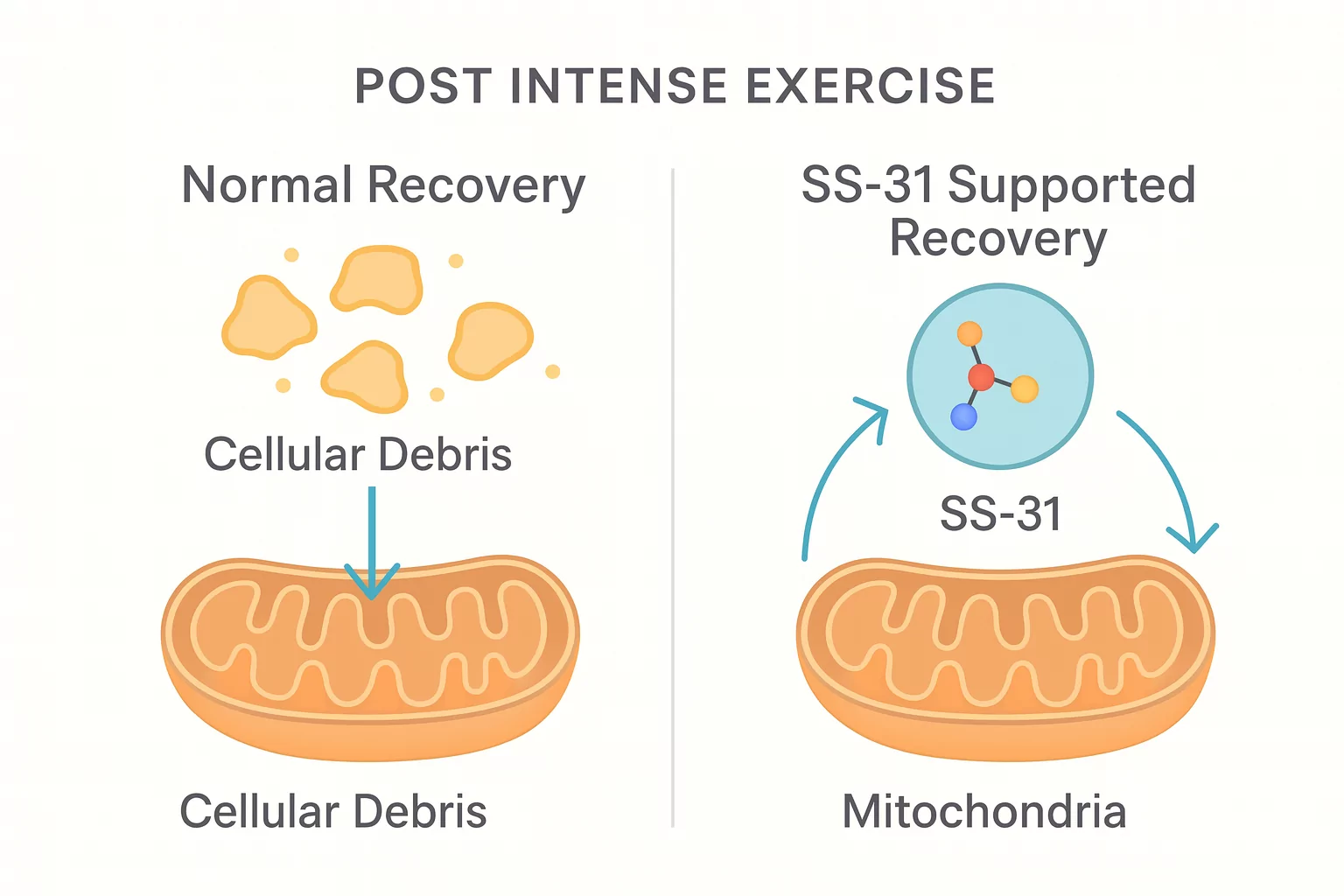
For athletes, the translated theoretical SS-31 peptide benefits center on enhanced recovery and resilience. By improving mitochondrial health, it may help muscle cells repair faster, reduce inflammation from strenuous workouts, and improve overall endurance capacity. Promising preclinical and clinical studies for conditions like heart failure and Barth syndrome highlight its cellular protective effects. However, it is critical to remember that its application in sports performance is purely experimental and anecdotal at this stage.
Part 2: The Non-Negotiable Pre-Checklist
Before you even consider sourcing, you must establish a foundation of safety and awareness. Skipping these steps is irresponsible.
- Medical Consultation is Mandatory. Schedule a visit with your physician. Discuss your interest in mitochondrial support and be transparent. A basic health screening, particularly of cardiovascular and kidney function (relevant to its research pathways), is essential.
- Comprehensive Baseline Bloodwork. You cannot measure change or detect adverse effects without a starting point. Essential panels include:
- Complete Metabolic Panel (CMP): Kidney and liver function.
- Lipid Profile: Cholesterol levels.
- Complete Blood Count (CBC): Overall health marker.
- Inflammatory Markers (hs-CRP): Baseline inflammation.
- Hormone Panel (Testosterone, Free T, Estradiol): To rule out peptide-related interactions.
- Optimize the Fundamentals. Ask yourself brutally: Is my training program periodized and sensible? Is my nutrition dialed in to support my goals? Is my sleep consistently 7-9 hours of high-quality rest? SS-31 is not a magic bullet for a broken foundation. Its potential is marginal compared to these pillars.
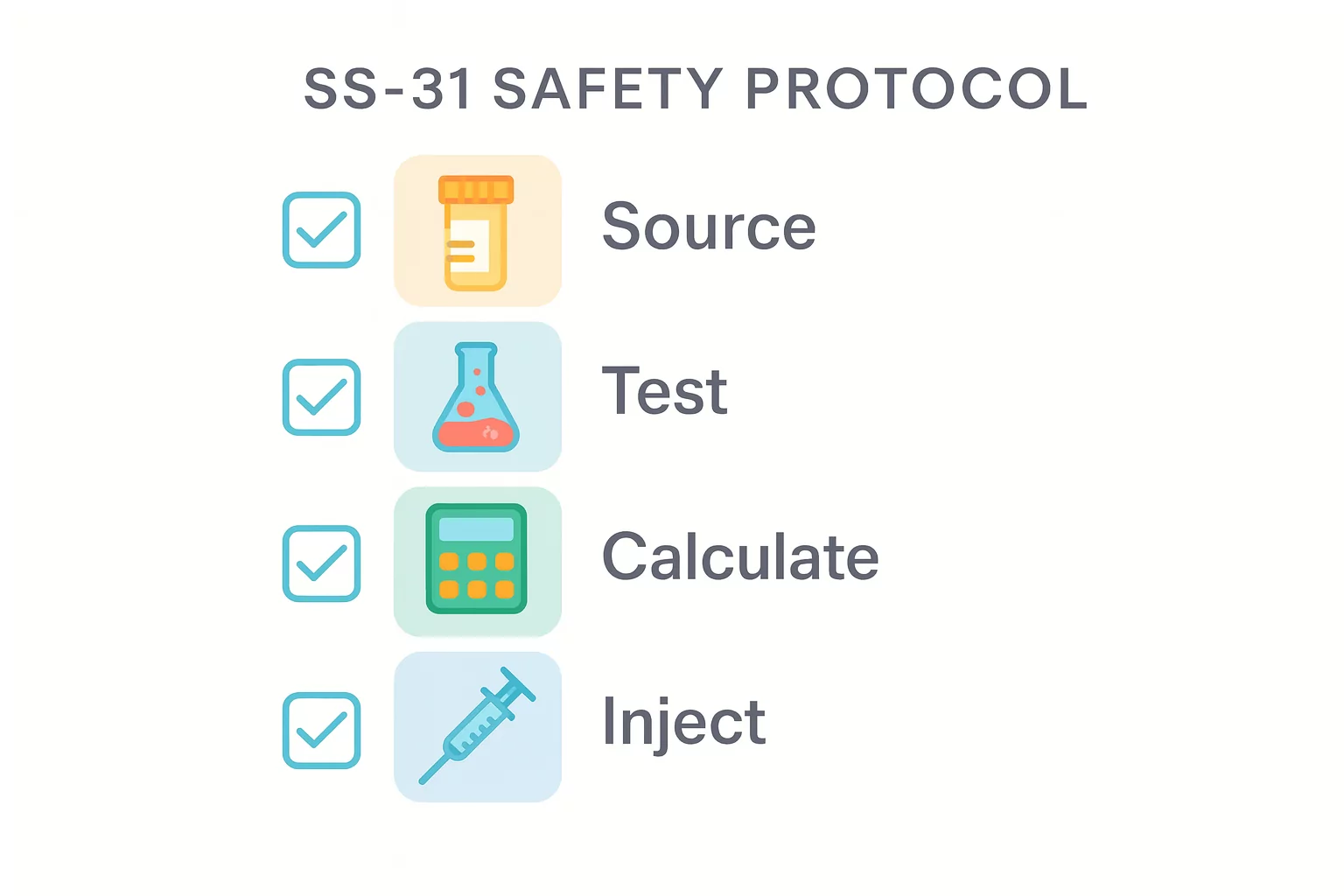
Part 3: The Safety Protocol – A Step-by-Step Framework
If you proceed after the pre-checklist, this protocol is your essential guide to risk mitigation.
Step 1: Sourcing with Extreme Skepticism
This is the single greatest risk factor. The research peptide market is unregulated.
- Demand Third-Party Testing: Only consider vendors who provide an independent Certificate of Analysis (CoA) from a reputable lab (e.g., Janoshik, Colmaric). The CoA must confirm >98% purity, correct mass, and absence of contaminants.
- Verify the CoA: Check dates, batch numbers, and that the testing aligns with the product you’re buying.
- Red Flags: Vendors making medical claims, lacking a CoA, or offering “too good to be true” prices.
Step 2: Pharmaceutical-Grade Handling
- Sterile Supplies: Use medical-grade bacteriostatic water for reconstitution, sterile insulin syringes, and alcohol swabs. Never reuse any component.
- Reconstitution & Math: Calculate your desired dose meticulously. Use peptide calculators and double-check your math. A common mistake is misinterpreting mcg vs. mg.
- Storage: Keep lyophilized (powder) vials in a deep freezer for long-term storage. Once reconstituted, most protocols suggest refrigerating and using within 2-4 weeks.
Step 3: Conservative Dosing & Administration
- The “Start Low” Creed: There is no established athletic dosing protocol. Anecdotal cycles often range from 2-4 mg per day, administered subcutaneously. A far more cautious approach is to start at the very low end (e.g., 1-2 mg/day).
- Cycle Length: Short cycles (4-6 weeks) followed by equal or longer off-periods are prudent to assess your body’s response and minimize unknown long-term risks.
- Administration: Use a clean, subcutaneous injection into fatty tissue (abdomen, thigh). Rotate injection sites daily to prevent lipohypertrophy.
Part 4: Monitoring, Side Effects, and Red Flags
You are conducting a self-experiment. Document everything.
- Expected vs. Adverse: Mild injection-site irritation (redness, itching) can occur. Systemic side effects reported in clinical trials include headache, dizziness, or GI discomfort—monitor these closely.
- Serious Red Flags (STOP IMMEDIATELY & SEEK MEDICAL CARE):
- Signs of severe allergic reaction (hives, difficulty breathing, swelling).
- Chest pain, palpitations, or irregular heartbeat.
- Significant changes in urine output or color.
- Vision disturbances.
- The On-Cycle Log: Track subjective feelings (energy, recovery, sleep quality, mood) and objective data (training logs, resting heart rate, body weight). Our guide on tracking performance metrics can help structure this.
- Post-Cycle Bloodwork: Repeat the same panels 4-6 weeks after your cycle ends. Compare to baseline. This is the only objective way to gauge the impact on your health markers.
Part 5: Integration and Final Considerations
Synergy and Stacking
Extreme caution is advised. Do not combine SS-31 with other experimental compounds. The interaction profiles are unknown. If considering foundational support, nutrients like CoQ10 or Alpha-Lipoic Acid may work on complementary pathways, but again, research is lacking. Focus on one variable at a time.
The Ethical and Competitive Dimension
For competing athletes, this is critical. The World Anti-Doping Agency (WADA) prohibits substances that modify mitochondrial function. SS-31 is almost certainly banned under the category of “Metabolic Modulators” (S4) or could fall under the broad prohibition of “M3: Gene and Cell Doping.” Its use could result in a career-ending disqualification.
The Final Word: Weighing Risk vs. Reward
The path of the modern athlete often involves exploring the cutting edge. However, the most powerful tools at your disposal remain the unsexy fundamentals: periodized training, micronutrient-dense nutrition, and prioritizing sleep hygiene.
SS-31 represents a fascinating but profound unknown. The safest way to use it is not to use it at all. The second-safest way is with the obsessive preparation, medical oversight, and humble attitude of a scientist experimenting on their own body—collecting data, not just chasing gains.
Your long-term health and performance are built on a foundation of consistency, not compounds. Ensure that foundation is unshakable first.
Additional Resources:
- WADA Prohibited List: The official document for competing athletes.
This article is part of our ongoing series on advanced recovery techniques. Always prioritize safety and education in your fitness journey.
